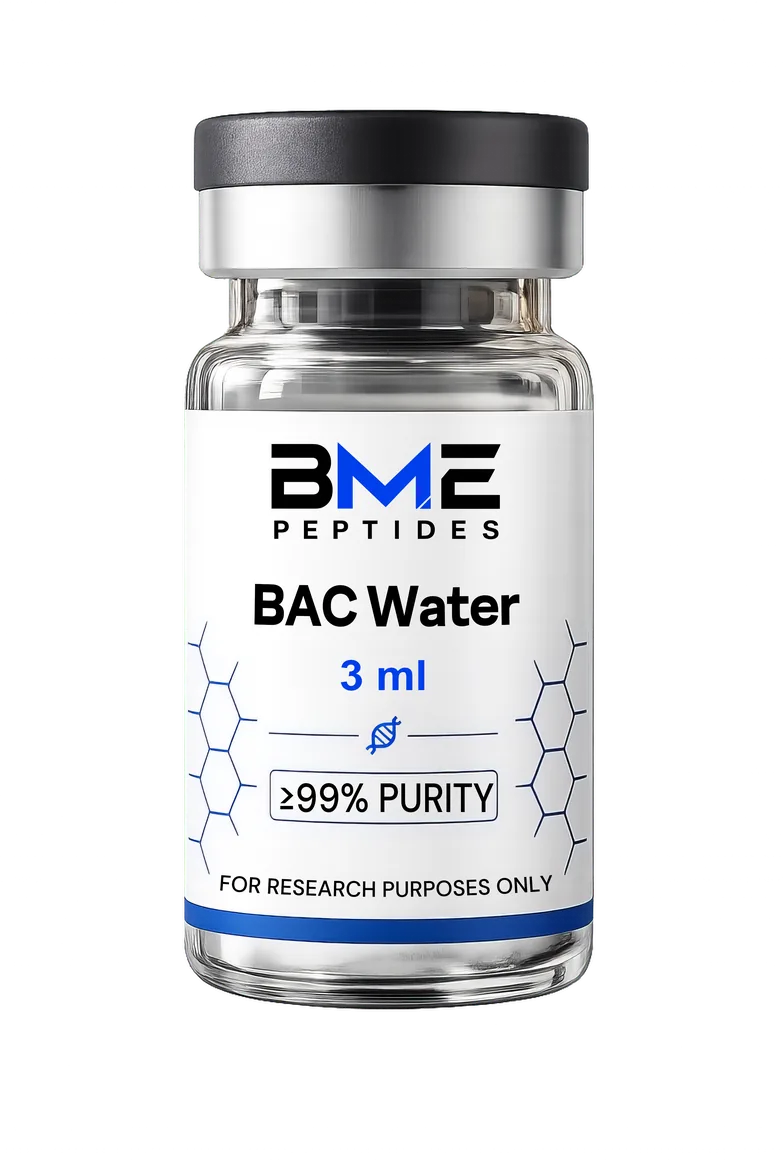
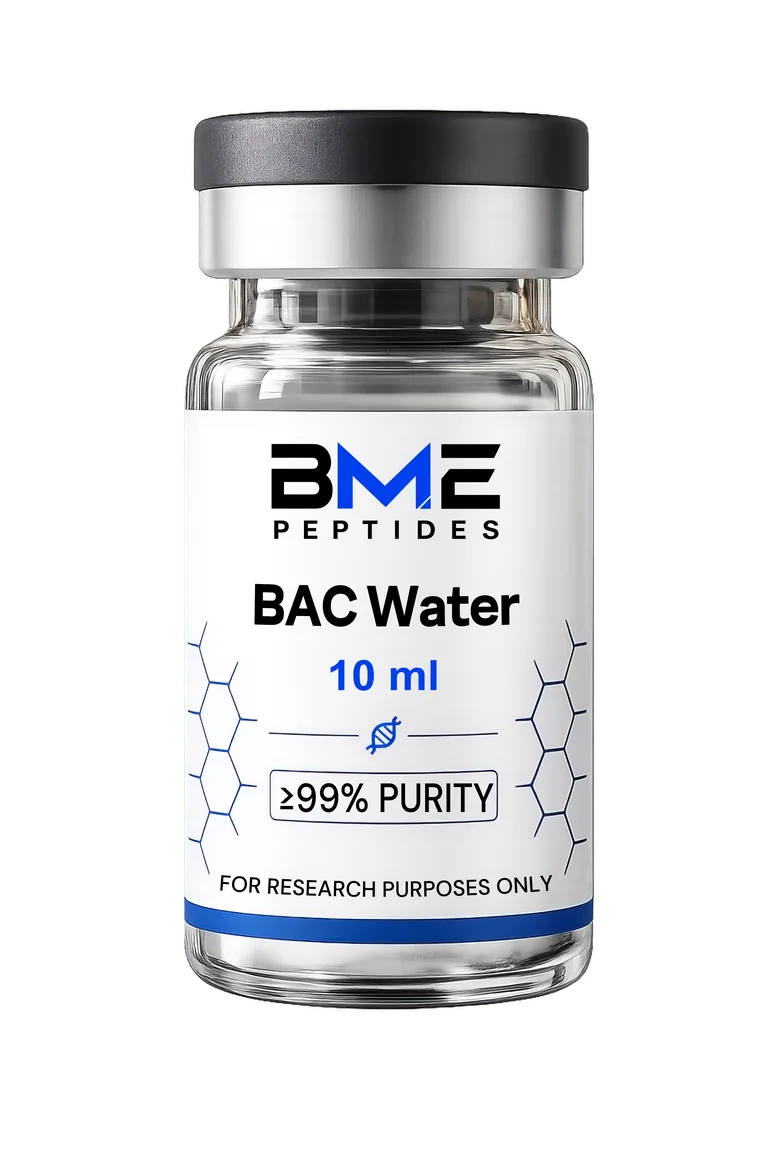
Bacteriostatic water is one of those compounds that rarely gets its own spotlight, but it plays a quietly essential supporting role across a wide range of research and compounding applications. It is, at its core, sterile water that contains a preservative — typically benzyl alcohol at 0.9%–1.1%, depending on the presentation — specifically added to prevent bacterial growth after a vial has been opened and used multiple times. That single property is what makes it a standard item in lab supply inventories around the world.
The "bacteriostatic" in its name says exactly what it does: it inhibits (stasis) bacterial growth rather than killing bacteria outright (that would be bactericidal). This preserved formulation means a vial can be entered and used multiple times over days or weeks without the contamination risk that would accompany plain sterile water. Understanding what it is, how the preservation works, and where it fits in research handling and storage is useful background for anyone working with injectable research compounds. BAC water is available from BME Health as a laboratory supply item.
1. What Is Bacteriostatic Water?
Bacteriostatic water for injection (BAC water) is sterile water that contains benzyl alcohol as a preservative. On the FDA-approved Hospira label the concentration is 0.9% w/v (9 mg/mL) in the 30 mL plastic vials and 1.1% w/v (11 mg/mL) in the 20 mL glass vials, so it is a property of the specific presentation rather than a single fixed figure. The full composition is straightforward: Water for Injection USP, plus benzyl alcohol. That is all. There are no active therapeutic ingredients, no pH adjustment agents in most formulations, and no buffers — just purified water and a single antimicrobial preservative.
It is classified as an injectable-grade product, meaning it meets pharmaceutical standards for sterility, particulate matter, and endotoxin levels. This is a higher standard than water used for general laboratory work, and it is what makes BAC water suitable as a diluent in preparations intended for injection.
The DailyMed database maintained by the U.S. National Library of Medicine carries the product labeling for commercial bacteriostatic water preparations, where the composition, intended use, and handling considerations are formally documented.
One important note on its regulatory status: while bacteriostatic water is widely used in compounding and research contexts, at least one commercial U.S. preparation is listed on DailyMed under an "unapproved drug — other" classification, reflecting FDA's position that the labeling has not been reviewed under the standard new drug approval process. It is a formulation ingredient and diluent, not a therapeutic drug product — a distinction that matters for how it is categorized and supplied.
2. How Bacteriostatic Water Differs from Sterile Water
The most common question about BAC water is how it compares to plain sterile water for injection — and the answer comes down entirely to the preservative.
Sterile water for injection (SWFI) is exactly what it sounds like: water purified to pharmaceutical standards and sterilized, with no additives. It is intended for single-dose use only. Once a vial of sterile water has been entered, there is no antimicrobial barrier protecting it, so the risk of bacterial contamination from ambient air, handling, or repeated needle entries increases with each use. Most sterile water vials are therefore designed and labeled for single-use.
Bacteriostatic water adds the benzyl alcohol preservative, which provides an ongoing antimicrobial effect after the vial is entered. This is what allows BAC water to be used across multiple entries over an extended period — a preserved multiple-dose vial is designed for repeated withdrawals rather than a single entry. The Hospira label describes the product as a multiple-dose vial intended for repeated withdrawals; it does not itself state a fixed in-use period, and any beyond-use interval applied in a given setting comes from that setting's own standards rather than from the product label. The preservative essentially acts as a continuous barrier against bacterial establishment in the fluid after each needle entry.
For research contexts involving multi-dose vials or reconstituted compounds that will be used across multiple experimental sessions over days or weeks, this distinction is practically significant. BAC water is the standard choice precisely because it preserves the microbiological integrity of the vial through repeated use.
3. What Benzyl Alcohol Does
Benzyl alcohol is an aromatic alcohol that has been used as a pharmaceutical preservative in parenteral (injectable) products for decades. Its antimicrobial mechanism involves disrupting bacterial cell membranes, interfering with cellular metabolism, and inhibiting bacterial replication at the concentrations typically used in formulations.
At the 0.9%–1.1% used in BAC water, benzyl alcohol is effective against a broad range of gram-positive and gram-negative bacteria, making it well-suited for multi-use vial preservation. It is also effective against some fungi, which is relevant in lab settings where fungal contamination can be a concern.
The preservative does not sterilize the water — it cannot eliminate contamination that is already present. Bacteriostatic water must be produced under sterile conditions in the first place; the benzyl alcohol then maintains that sterility against new contamination introduced during use. This is an important distinction: BAC water is not a decontamination product. It is a maintenance product that keeps a sterile solution protected during multi-dose use.
Benzyl alcohol has a long safety and characterization record in pharmaceutical use, as reflected in its inclusion across numerous injectable formulations documented in pharmaceutical databases. That said, it is not without considerations — there are specific patient populations and contexts where benzyl alcohol-preserved products are contraindicated or used with caution, which is why the complete labeled guidance for any preparation using BAC water should be consulted in the context of its intended application.
4. Its Role in Research Handling and Reconstitution
Many research compounds — including lyophilized (freeze-dried) peptides and proteins — are supplied as dry powders that must be dissolved in a suitable diluent before use. The choice of diluent matters both for the stability of the reconstituted compound and for the microbiological integrity of the vial during its research lifecycle.
BAC water is commonly used as a reconstitution diluent in this setting because it combines pharmaceutical-grade sterility with the multi-dose preservation that multi-session research protocols typically require. A researcher dissolving a lyophilized peptide into a vial for use across several experimental sessions benefits from the bacteriostatic protection — plain sterile water would not offer that same multi-entry protection.
For researchers at BME Health working with compounds like those covered in related articles — from the injectable accessories and lab supplies overview to specific compounds like GHK-Cu, glutathione, or ipamorelin — understanding the role of the diluent in research preparation is part of maintaining proper laboratory practice. BAC water's place in that workflow is as a carefully specified formulation vehicle, not an active experimental compound.
It is worth being clear: this article does not provide instructions on reconstituting any specific compound, and none of the information here constitutes guidance on human use or self-administration. Those are outside the scope of BME Health's research-only supply context.
5. Storage and Handling
Storage of unopened inventory follows the product label. Hospira's Bacteriostatic Water for Injection, USP directs storage at 20 to 25 °C (68 to 77 °F) — USP Controlled Room Temperature — and specifies no in-use period once a vial has been entered. It is supplied as a multiple-dose container from which repeated withdrawals may be made. Where an in-use limit exists at all, it is set by the labeling of the specific preparation, so that label is what should be consulted rather than any general figure.
Visual inspection is not just good laboratory practice here, it is what the label requires: the product is not to be used unless the solution is clear and the seal is intact. Turbidity, visible particulates, discoloration, or evidence of container damage are grounds for taking the vial out of use.
The labeled guidance for BAC water preparations available through DailyMed provides the formal storage and handling specifications for reference.
6. Research Status and Sourcing
Bacteriostatic water is not an approved active drug. It is a sterile injectable formulation vehicle. As noted, at least one U.S. commercial preparation carries an "unapproved drug — other" classification from the FDA, reflecting the nature of its regulatory pathway rather than any concern about its formulation integrity. It is a widely used and well-characterized compounding and laboratory supply item.
BAC water is available from BME Health, supplied for laboratory and research use alongside other research compounds. Researchers sourcing BAC water for use with any compound should follow appropriate laboratory handling procedures and ensure their use is consistent with the research-only context in which these materials are supplied.
This article is for educational and research purposes only and is not medical advice.
7. Frequently Asked Questions
What is bacteriostatic water used for? BAC water serves as a preserved sterile diluent in research and compounding contexts. It is used primarily where a solution needs to be prepared once and used across multiple entries over days or weeks, since the benzyl alcohol preservative maintains microbiological integrity after each vial puncture. DailyMed product labeling provides the formal description of its indicated use.
What is the difference between bacteriostatic water and sterile water? Sterile water for injection contains no preservatives and is intended for single-dose use only. Bacteriostatic water adds benzyl alcohol — 0.9% w/v (9 mg/mL) or 1.1% w/v (11 mg/mL) on the Hospira label, depending on the presentation — which inhibits bacterial growth after the vial is entered, making it suitable for repeated withdrawals rather than a single entry. The Hospira product label describes it as a multiple-dose vial designed for repeated withdrawals; it does not state a fixed in-use period.
Why does bacteriostatic water contain benzyl alcohol? Benzyl alcohol is an antimicrobial preservative that disrupts bacterial cell membranes at the concentrations used in injectable formulations, preventing bacterial establishment in the solution after each vial entry. It has been used in pharmaceutical injectable products for decades and is the standard preservative choice for multi-dose sterile preparations.
Is bacteriostatic water an FDA-approved drug? Not in the conventional sense. At least one commercial U.S. preparation is classified by the FDA as an "unapproved drug — other," meaning the product labeling has not gone through a standard new drug approval process. BAC water is a formulation vehicle and diluent rather than a therapeutic drug product, and its regulatory classification reflects that distinction.
How long does bacteriostatic water last after opening? The FDA-approved labeling for Hospira's Bacteriostatic Water for Injection, USP sets no in-use period after a vial is first entered. It describes a multiple-dose container from which repeated withdrawals may be made, directs storage at 20 to 25 °C (68 to 77 °F), and states that the product is not to be used unless the solution is clear and the seal is intact. It also directs that reconstituted solutions of other drugs not be stored unless the manufacturer of that drug says otherwise. Any in-use limit therefore comes from the labeling of the specific preparation in hand, and that label is the only authority on it.
What does bacteriostatic mean? Bacteriostatic describes something that inhibits bacterial growth without necessarily killing bacteria outright. The term contrasts with bactericidal (which kills bacteria). BAC water inhibits bacterial replication in the solution through the action of benzyl alcohol, keeping bacterial counts from reaching levels that would compromise the preparation's integrity.
Can bacteriostatic water be used for peptide reconstitution in research? BAC water is widely used as a reconstitution diluent for lyophilized research compounds, including peptides, in laboratory settings. Its combination of pharmaceutical-grade sterility and multi-dose preservation makes it a practical choice for research protocols that involve repeated use of a reconstituted compound across multiple experimental sessions.
Is bacteriostatic water the same as saline? No. Normal saline is 0.9% sodium chloride in water. Bacteriostatic water does not contain sodium chloride — it is water with benzyl alcohol as a preservative. These are distinct formulations with different compositions, and their suitability for any given research application depends on the specific requirements of the compound being reconstituted or diluted.
8. References
- Hospira, Inc. Bacteriostatic Water for Injection, USP — product label (NDA018802). DailyMed, U.S. National Library of Medicine. dailymed.nlm.nih.gov — setid 87d6e9dc
- Meyer BK, Ni A, Hu B, Shi L. Antimicrobial preservative use in parenteral products: past and present. Journal of Pharmaceutical Sciences. 2007 Dec;96(12):3155–67. doi:10.1002/jps.20976. PMID 17722087
- Karabit MS, et al. Studies on the evaluation of preservative efficacy — II. The determination of antimicrobial characteristics of benzylalcohol. Journal of Clinical and Hospital Pharmacy. 1986 Aug;11(4):281–9. PMID 3531242
- Stroppel L, Schultz-Fademrecht T, Cebulla M, Blech M, Marhöfer RJ, Selzer PM, Garidel P. Antimicrobial preservatives for protein and peptide formulations: an overview. Pharmaceutics. 2023 Feb 7;15(2):563. doi:10.3390/pharmaceutics15020563. PMID 36839885
- TM Biowater, Inc. TM Biowater — bacteriostatic water injection. DailyMed, U.S. National Library of Medicine. Marketing category: unapproved drug other. dailymed.nlm.nih.gov — setid 513d788f
Shop this compound
Documented, batch-tested, and supplied for research use only.